
How Much Hair Fall Is Normal Per Day? Understanding Hair Shedding & Hair Loss
-
By Jubina John
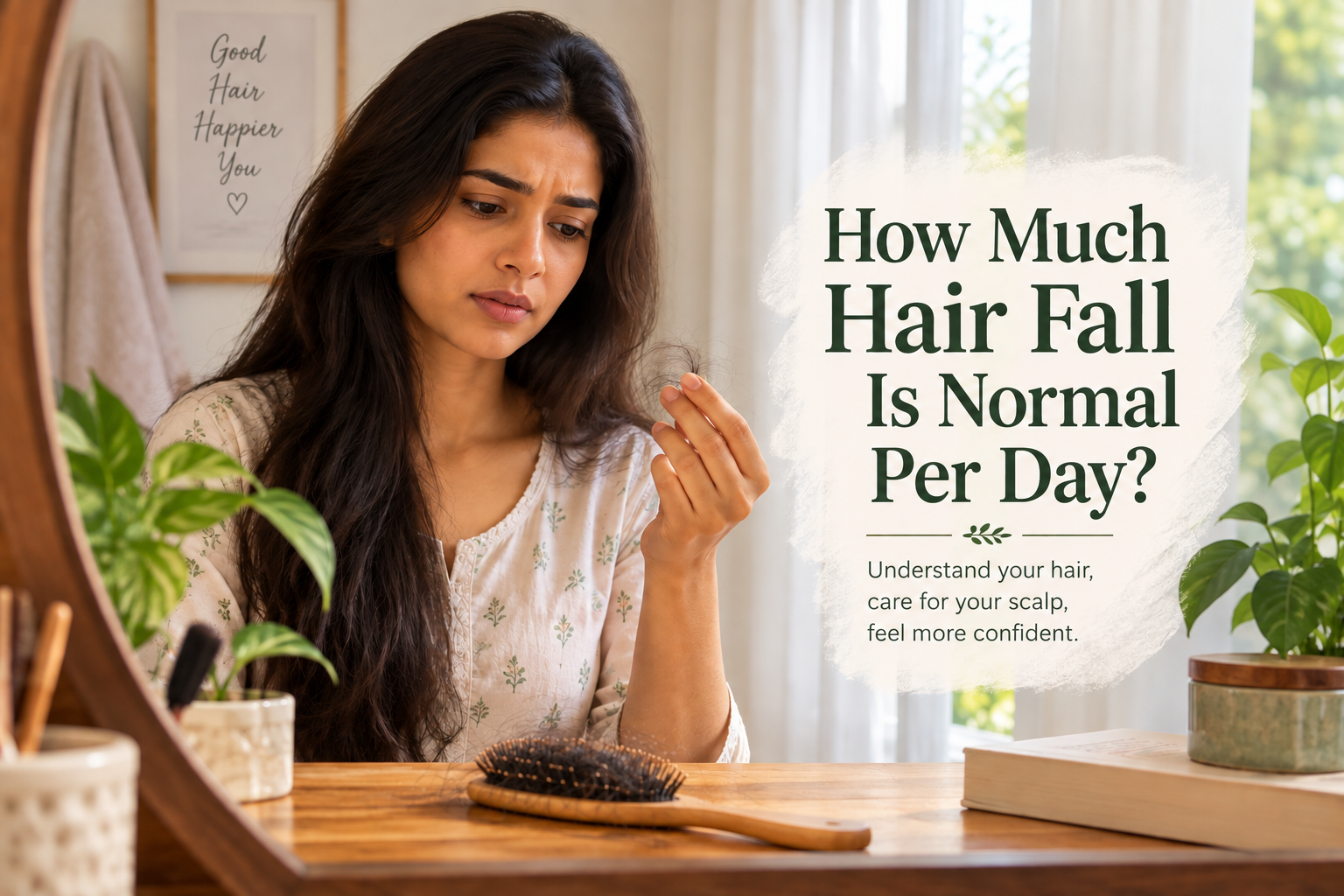
You notice a few strands on your pillow.
Then some in your comb.
And after washing your hair, the shower drain seems to have collected even more.
The first thought is almost always:
“Am I losing too much hair?”
If you’ve ever worried about this, you’re not alone. But seeing hair fall every day doesn’t necessarily mean you’re experiencing hair loss.
How Much Hair Fall Is Normal Per Day?
Losing around 50–100 hairs a day is commonly considered normal. Hair naturally goes through a growth cycle, and some strands eventually shed to make room for new ones.
You may also notice more hair on wash days because several days’ worth of naturally shed hair can come out together.
So rather than counting every strand, pay attention to changes in your usual hair-shedding pattern.
Hair Shedding or Hair Loss? Know the Difference
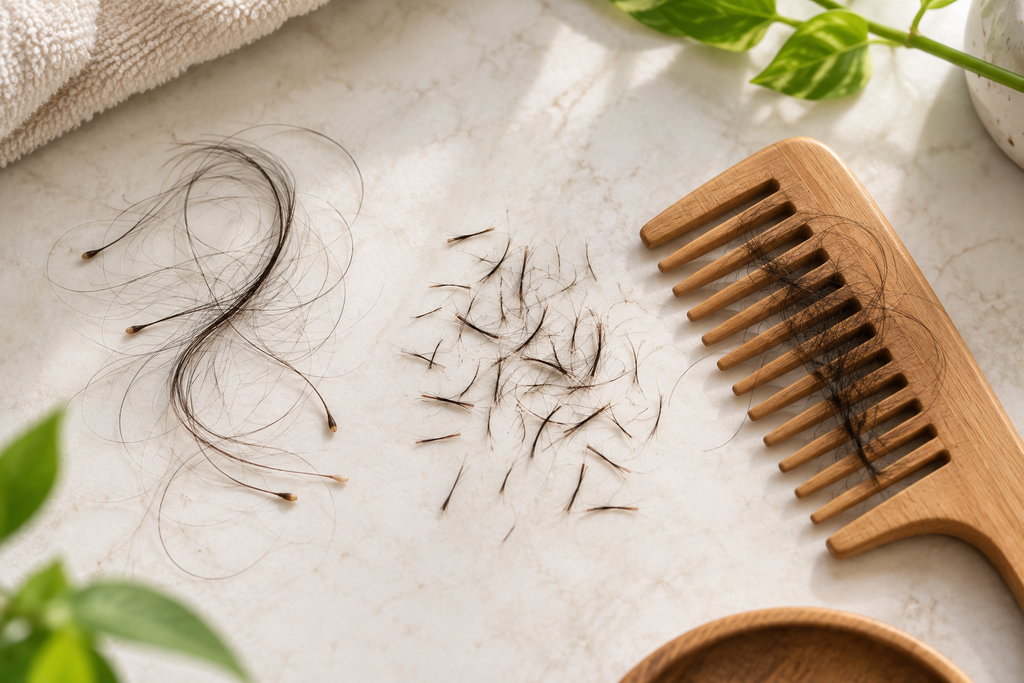
Not every strand you find means the same thing.
Normal Hair Shedding
A few strands on your pillow, comb or during washing are usually part of the normal hair cycle.
Hair Breakage
Finding lots of short pieces instead of full-length strands may indicate breakage. Heat styling, chemical treatments, tight hairstyles, rough brushing and dryness can weaken the hair shaft.
You can learn more about this in our guide to hair breakage and herbal hair care.
Excessive Hair Fall
If you suddenly notice significantly more shedding than usual, a widening part, a thinner ponytail or increased scalp visibility, it’s worth paying attention.
Bald Patches
Clearly defined bald spots are different from everyday shedding and should be professionally evaluated.
Why Might Hair Fall Increase?
Hair fall can have several causes, including:
1. Stress or major life changes
2. Nutritional deficiencies or restrictive diets
3. Hormonal changes
4. Certain illnesses or medications
5. Scalp conditions
6. Excessive heat or chemical treatments
7. Tight hairstyles
8. Poor hair-care practices
Sometimes, increased shedding can even appear weeks or months after a stressful event, making the cause difficult to identify.
If dandruff or scalp irritation is part of your concern, our guide on Ayurvedic ways to care for your scalp and manage dandruff may also be useful.
What Can You Do About Hair Fall?

Before trying every hair-fall remedy you see online, take a closer look at your routine.
Nourish Your Scalp
Regular, gentle oiling can be a simple part of your hair-care routine. Nandikesam Herbal Hair Oil contains Ayurvedic herbs and oils traditionally used for scalp and hair care.
Keep Your Scalp Clean
A clean scalp is an important part of a healthy hair-care routine. Use a suitable shampoo and avoid excessive product buildup.
Explore Nandikesam Herbal Shampoo for a gentle cleansing routine.
Be Gentle With Your Hair
Avoid aggressive brushing, excessive heat, very tight hairstyles and frequent chemical treatments. Handle wet hair gently and minimise unnecessary friction.
Look Beyond Your Hair
Your hair can sometimes reflect what’s happening with your overall wellbeing. A balanced diet, adequate protein, good sleep and stress management are all important parts of taking care of yourself.
When Should You See a Dermatologist?
Don’t panic over a few strands.
However, professional advice is worth considering if you notice:
• Sudden or severe hair shedding
• Persistent thinning
• Bald patches
• A rapidly widening part
• Significant hairline changes
• Persistent itching, redness or scalp irritation
The underlying cause matters because different types of hair loss may require different approaches.
So, Should You Worry About Hair in Your Comb?
Not every strand deserves a moment of panic.
Some hair fall is normal.
Instead of counting every strand, look for changes over time.
Is your parting becoming wider?
Is your ponytail getting thinner?
Are you seeing more short, broken pieces?
Has your shedding suddenly increased?
Your hair is often giving you clues. You just need to know what to look for.
At Nandikesam, we believe good hair care starts with understanding your scalp and building simple, consistent habits.
Care for your roots. Be patient with your hair. And listen to what your scalp is telling you.