
How Your Diet Affects Hair Fall: Foods & Nutrients for Healthy Hair
-
By Jubina John
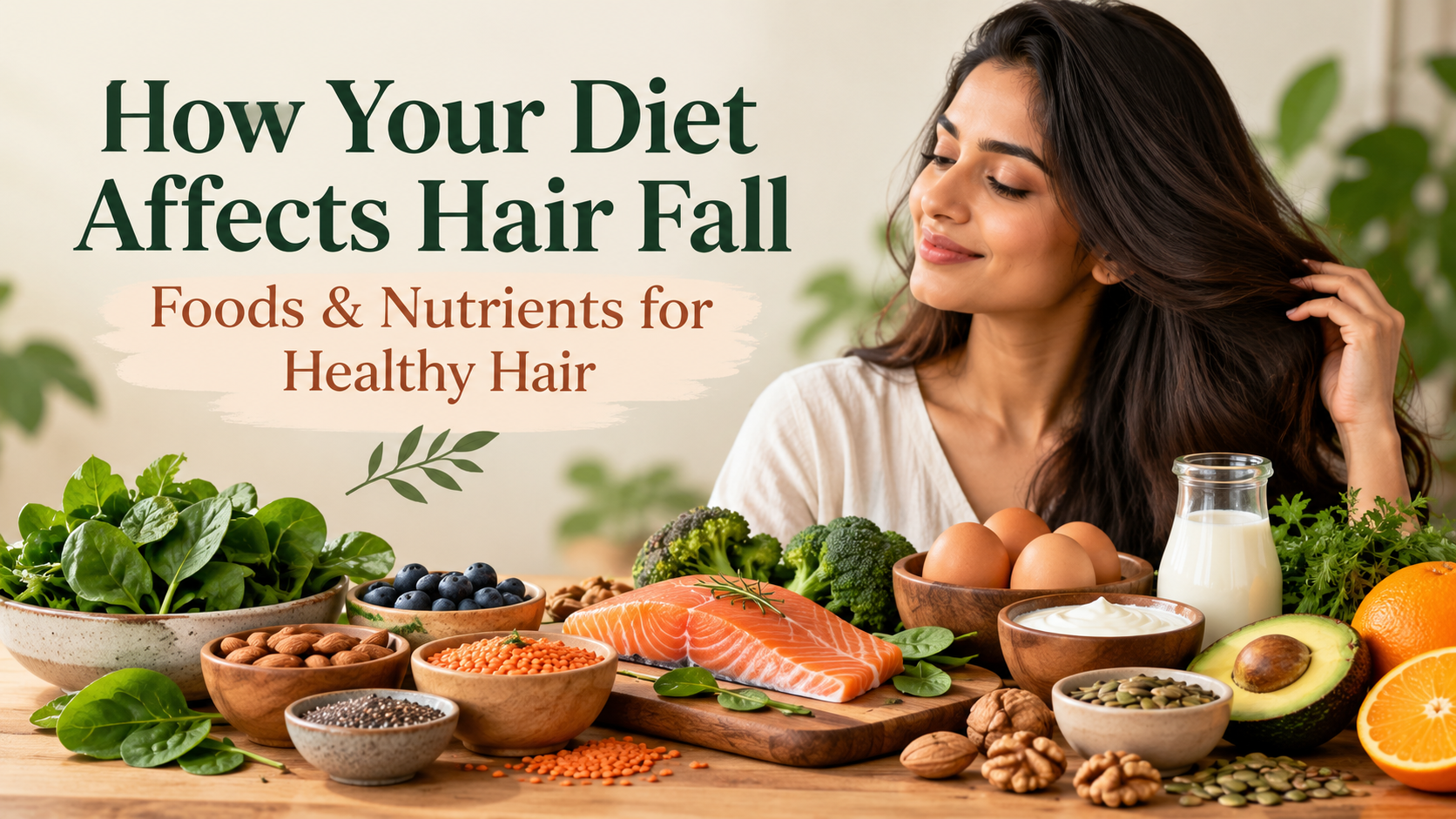
How Your Diet Affects Hair Fall: Foods & Nutrients for Healthy Hair
You may spend time choosing the right shampoo, oiling your hair regularly, and following a careful hair-care routine. But there is another factor that often gets overlooked: what you eat.
Hair growth requires energy, protein, vitamins, and minerals. When your diet does not provide enough of these nutrients, your hair may become weaker, thinner, or more prone to excessive shedding.
So, can your diet cause hair fall? Yes, an unbalanced or highly restrictive diet can contribute to hair shedding, particularly when it leads to inadequate protein or nutrient deficiencies. However, diet is only one possible factor. Hormonal changes, stress, illness, genetics, scalp conditions, and certain medications can also contribute to hair loss.
How Does Diet Affect Hair Growth?
Hair follicles are among the tissues in the body with active cell turnover. They need adequate nutrition to support normal hair production and the hair-growth cycle.
When the body does not receive enough energy or essential nutrients, it may prioritise vital functions over processes such as hair growth. Restrictive diets and inadequate protein intake have been associated with changes in hair health and increased shedding.
This does not mean that eating one particular “hair-growth food” will suddenly stop hair fall. Instead, a consistently balanced diet provides the nutritional foundation your hair needs.
If you are already experiencing excessive shedding, you can also learn more about how much hair fall is normal per day.
Which Nutrients Are Important for Healthy Hair?
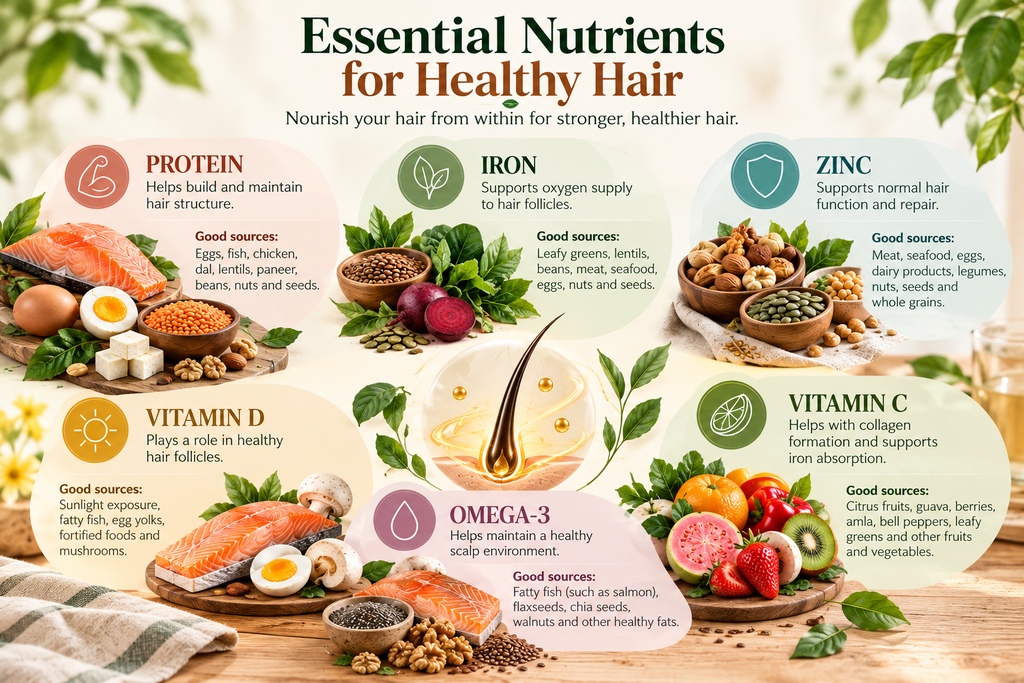
Several nutrients are involved in maintaining normal hair growth. Some of the most important ones include:
1. Protein
Hair is primarily made up of a protein called keratin, making adequate protein intake an important part of a healthy diet.
Very restrictive diets or consistently low protein intake can leave the body without sufficient building blocks for normal hair production.
Good dietary sources include:
• Eggs
• Fish
• Chicken
• Milk & Curd
• Paneer
• Dal & Lentils
• Beans
• Soy and other plant-based protein sources
• Nuts & seeds
If you follow a vegetarian or vegan diet, paying attention to getting enough protein from a variety of plant sources becomes especially important.
2. Iron
Iron deficiency is one of the nutritional factors associated with hair loss, particularly in people who are already at risk of deficiency.
Iron is involved in oxygen transport and several important biological processes. Research has found associations between iron status and hair health, although iron supplementation is not appropriate for everyone experiencing hair fall.
Iron-rich foods include:
• Green leafy vegetables
• Lentils and beans
• Meat and seafood
• Eggs
• Nuts and seeds
• Iron-fortified foods
If you suspect an iron deficiency, it is better to discuss testing with a healthcare professional rather than taking iron supplements on your own.
3. Zinc
Zinc plays a role in many processes involved in cell growth and tissue maintenance, including normal hair follicle function.
Low Zinc levels have been observed in some people with different types of hair loss. However, taking extra zinc when you are not deficient does not necessarily improve hair growth, and excessive supplementation can cause problems.
Foods containing Zinc include:
• Meat and seafood
• Eggs
• Dairy products
• Legumes
• Nuts
• Seeds
• Whole grains
4. Vitamin D
Vitamin D has been studied extensively in relation to different types of hair loss. Research has found associations between low vitamin D levels and some hair-loss conditions, although the relationship is not fully understood and low vitamin D is not the explanation for every case of hair fall.
Sources of vitamin D include sunlight exposure, fortified foods, fatty fish, egg yolks, and certain other foods.
If you have symptoms or risk factors for deficiency, a healthcare professional can advise whether testing is appropriate.
5. Vitamins and Antioxidants
Other nutrients, including vitamins B, C, and E, also contribute to normal body functions that support healthy skin and hair.
Vitamin C is particularly useful for overall nutrition and also helps the body absorb non-heme iron from plant foods.
Fruits, vegetables, nuts, seeds, whole grains, and other minimally processed foods can help provide a variety of vitamins and minerals as part of a balanced diet.
What Foods Should You Eat to Reduce Hair Fall?
There is no single food that can prevent all types of hair loss. Instead, focus on creating a varied diet that provides enough protein, iron, vitamins, minerals, healthy fats, and overall energy.
Some useful additions to a balanced diet include:
• Eggs and dairy: Convenient sources of protein and other nutrients.
• Fish: Provides protein and, depending on the type, nutrients such as vitamin D and omega-3 fatty acids.
• Leafy greens: Provide folate, iron, and other micronutrients.
• Lentils and beans: Useful plant-based sources of protein, iron and other nutrients.
• Nuts and seeds: Provide protein, healthy fats and minerals such as zinc.
• Fruits and vegetables: Help provide vitamin C, antioxidants and a wide range of micronutrients.
The goal is not to create a complicated “hair diet”. It is to make your everyday meals more nutritionally complete. For more practical hair-care guidance, you can also explore Nandikesam’s hair-care tips.
Can Crash Dieting Cause Hair Fall?
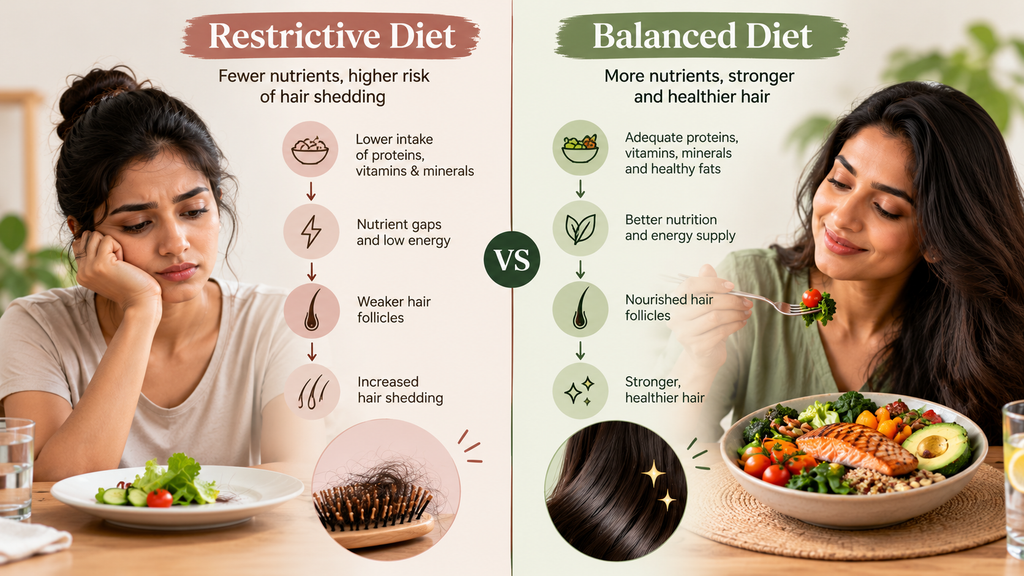
Yes, restrictive dieting can contribute to hair shedding.
Rapid weight loss, very low-calorie diets, or diets that eliminate major food groups can reduce the intake of protein, iron, vitamins, minerals, and overall energy.
In some cases, increased shedding may not appear immediately. Hair growth follows a cycle, so changes in nutrition or other physical stressors can sometimes become noticeable only weeks or months later.
This is one reason why sudden hair fall should not always be attributed to the hair products you are currently using.
Can Too Many Supplements Cause Hair Fall?
More is not always better.
It is common to see hair supplements containing Biotin, Vitamin A, Zinc, Selenium, and other nutrients marketed for hair growth. But taking high doses unnecessarily can be harmful.
Some evidence suggests that excessive intake of certain nutrients, including vitamin A and selenium, may itself be associated with hair loss. There is also limited evidence that taking biotin improves hair growth in people who are not deficient.
If you think a nutritional deficiency may be contributing to your hair fall, identifying the actual deficiency is more useful than taking multiple supplements without guidance.
A Simple Diet Approach for Healthier Hair
You do not need an expensive diet or a long list of superfoods to support your hair.
Try to build regular meals around:
• A protein source such as eggs, fish, chicken, dairy, dal, beans, or soy
• Vegetables, including leafy greens
• Fruits for a variety of vitamins and antioxidants
• Whole grains or other nutritious carbohydrate sources
• Nuts and seeds in appropriate portions
• Adequate fluids throughout the day
Along with nutrition, remember that healthy hair also depends on your overall routine. Adequate sleep, stress management, gentle hair handling, and appropriate scalp care all have a role to play.
Is Diet the Only Cause of Hair Fall?
No. Hair fall can have many causes, including genetics, hormonal changes, stress, illness, nutritional deficiencies, scalp conditions, medications, tight hairstyles, and excessive chemical or heat treatments.
This is why simply changing your diet may not resolve persistent or severe hair loss.
If you notice sudden or excessive shedding, visible thinning, a widening hair part, bald patches, significant changes in the hairline, or persistent scalp irritation, it is worth seeking professional advice to identify the underlying cause.
Frequently Asked Questions
Can a poor diet cause hair fall?
Yes. A diet that is very restrictive or lacking in adequate protein, energy, iron, or other essential nutrients can contribute to hair shedding. However, diet is only one possible cause of hair loss.
What should I eat to stop hair fall?
There is no single food that can stop all types of hair fall. Focus on a balanced diet containing adequate protein, iron-rich foods, fruits, vegetables, whole grains, nuts, and seeds.
Does protein help hair growth?
Adequate protein is vital as hair is made mainly of keratin, a structural protein. Prolonged lack of protein can also affect the health of your hair.
Which vitamin is best for hair growth?
There is no single “best” vitamin for everyone. Nutrients such as vitamin D, iron, zinc, and several B vitamins have been studied in relation to hair health. Supplementation is most appropriate when a deficiency or increased need has been identified.
Can dieting cause temporary hair loss?
Yes. Physical stressors, such as major calorie restriction, rapid weight loss, or nutritional deficiencies, can cause increased hair shedding.
Final Thoughts
Your hair-care routine does not begin and end with shampoo and hair oil. Nutrition is also part of healthy hair care.
Instead of searching for one miracle food or supplement, focus on eating a varied, balanced diet that provides enough protein, iron, vitamins, minerals, and overall energy.
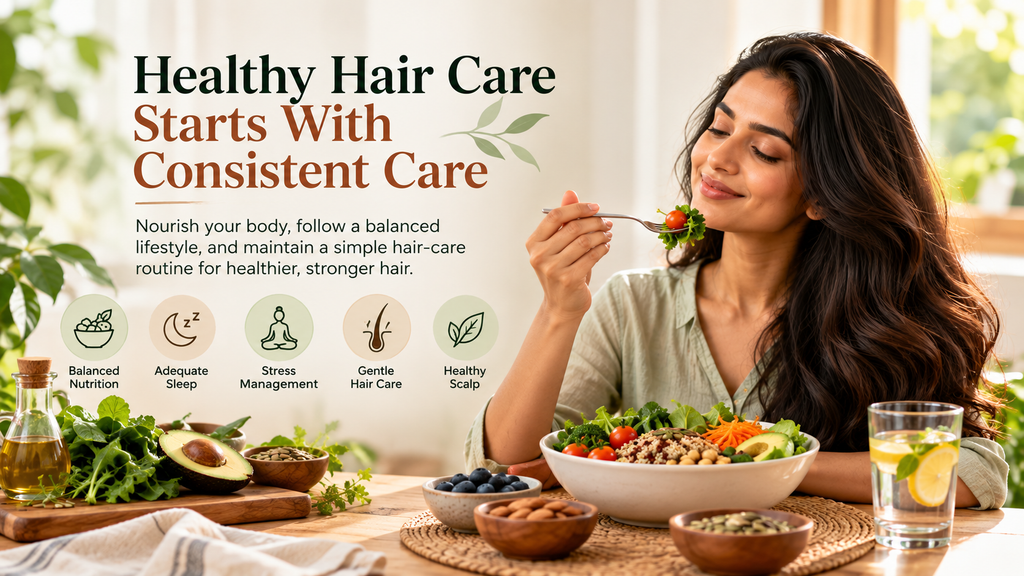
And if hair fall becomes sudden, excessive, or persistent, remember that the cause may be more than your diet. Understanding what is happening at the scalp and hair follicle level is the first step towards choosing the right approach.
At Nandikesam, we believe healthy hair care is about consistent, thoughtful care – from nourishing your body to maintaining a simple routine for your scalp and hair.