
Fatty Liver in Non-Drinkers: Causes, Symptoms and Lifestyle Changes
-
By Jubina John
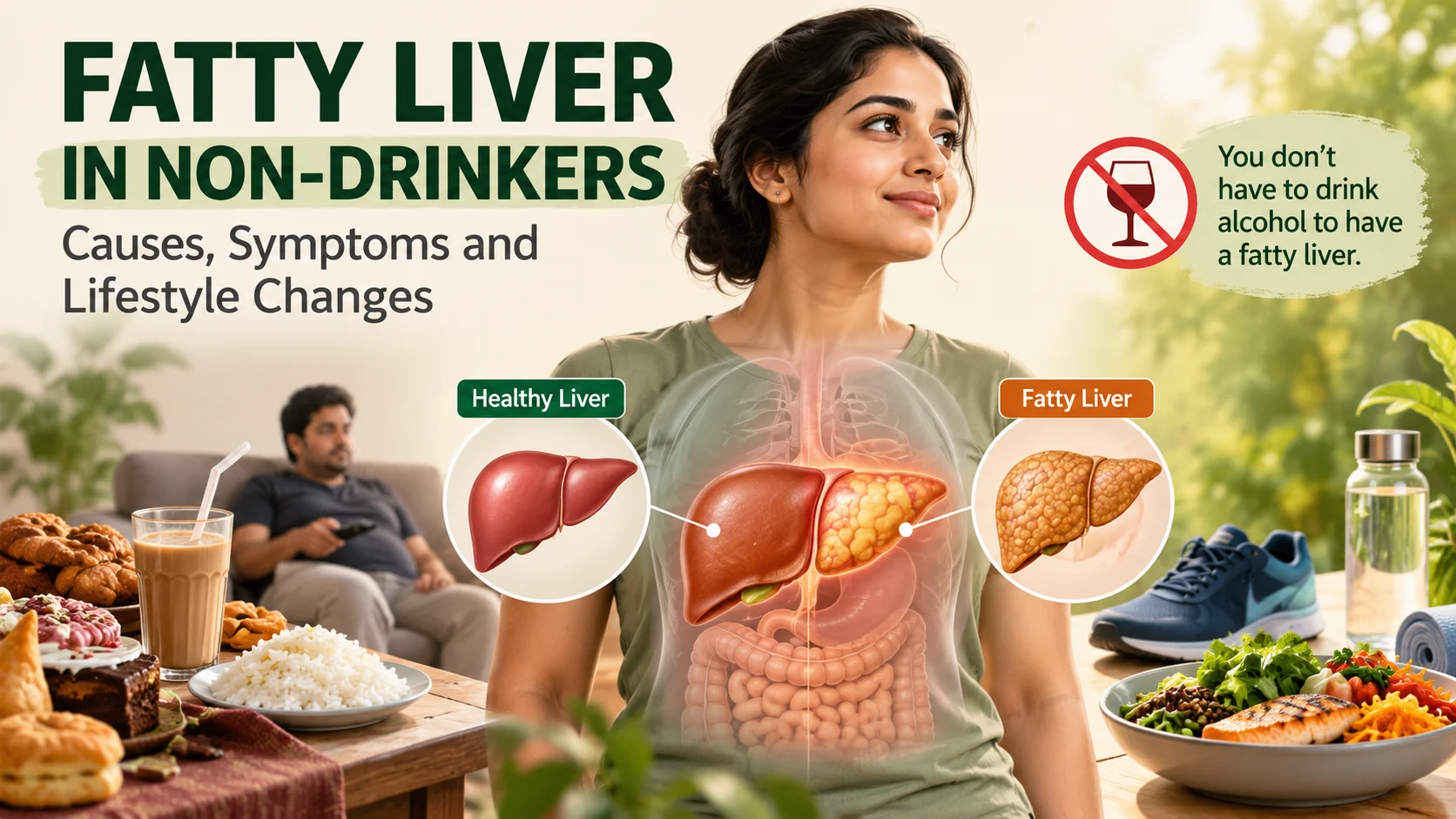
About one in three adults in India is living with a fatty liver, and most of them have no idea. Many have never had a single drink in their lives.
That surprises people, because the liver has been linked with alcohol for a long time. But another form of the disease has been growing quietly, driven by what we eat, how little we exercise and how our bodies handle sugar. The assurance we have is that it is often reversible, especially when it is caught early. This blog explains what causes fatty liver in non-drinkers, which symptoms to watch for, and the everyday changes that help the liver recover.
What Is Fatty Liver in People Who Don’t Drink?
Fatty liver means extra fat has been deposited inside liver cells. A healthy liver holds a little fat, but when it makes up more than about 5 percent of the organ’s weight, doctors call it fatty liver.
When alcohol is not the cause, the condition is now called MASLD, short for metabolic dysfunction-associated steatotic liver disease. Your report may still use the older names, non-alcoholic fatty liver disease or NAFLD. All of them describe the same thing: a liver overloaded with fat because of the way the body handles energy.
Fatty liver moves through stages. It begins as simple fat, which is harmless and fully reversible. In some people the fat triggers inflammation, a stage called MASH. Over the years, inflammation can leave scar tissue (fibrosis), and heavy scarring can progress to cirrhosis. Most people never get that far, which is exactly why the early stage is the best time to act.
Is Fatty Liver Dangerous?
For most people, simple fatty liver is not dangerous by itself. The concern is what comes with it. Fatty liver is closely linked with type 2 diabetes and heart disease, and heart disease is the leading cause of death among people who have it. A smaller group progresses to MASH and scarring. So looking after your liver also protects your heart.
What Causes Fatty Liver Without Alcohol?
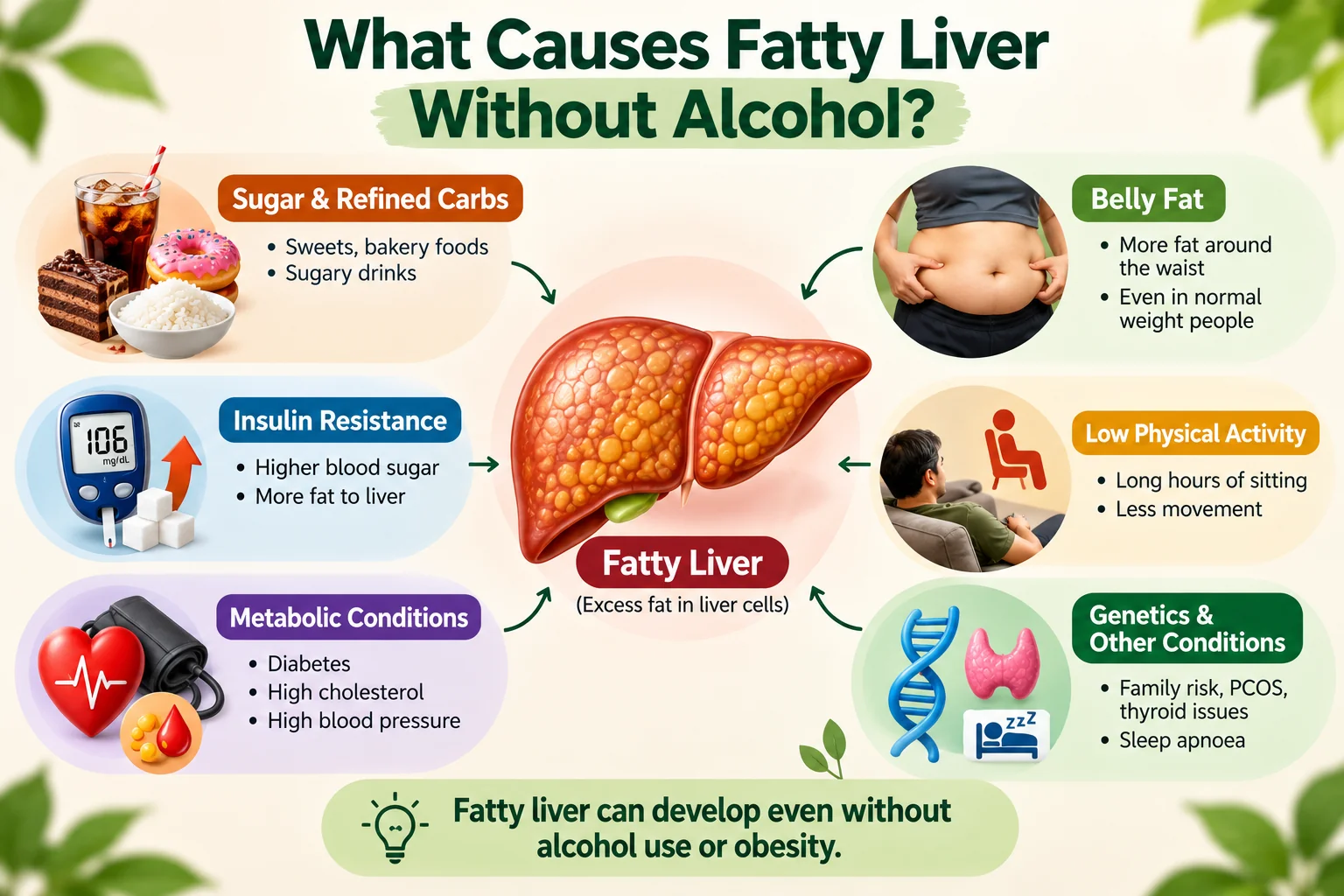
The common thread is insulin resistance. When cells stop responding well to insulin, the body sends more fat to the liver and holds on to it there. Several everyday factors push things in that direction.
• Excess calories and low activity. Energy the body does not use gets stored as fat, and the liver is one of the places it lands.
• Sugar and refined carbohydrates. Large portions of white rice, maida products, bakery items, sweets and sweetened tea add up. Sugary drinks are especially hard on the liver because of the fructose they carry.
• Belly fat. Fat around the abdomen is metabolically active and feeds fat storage in the liver. Waist size often tells you more than body weight.
• Diabetes, prediabetes and abnormal cholesterol. High blood sugar, high triglycerides and high blood pressure usually travel together with fatty liver.
• Other medical conditions. PCOS, an underactive thyroid and sleep apnoea all raise the risk.
• Rapid weight loss. Crash diets can stress the liver, so gradual change is safer.
• Certain medicines. Some long-term medicines, including steroids, can contribute. Never stop a prescribed drug without your doctor’s advice.
• Genetics. South Asians tend to store fat around internal organs even at a lower body weight, which is why a slim person can still have fatty liver.
Symptoms of Fatty Liver: Why Most People Feel Nothing
The liver has no pain nerves inside it, so early fatty liver is usually silent. Most people discover it by accident, through an ultrasound or a blood test that shows raised liver enzymes.
When symptoms do appear, they are vague and easy to blame on something else:
• Tiredness that rest does not fix
• A dull heaviness or discomfort in the upper right side of the abdomen
• A widening waistline
• Dark, velvety patches of skin on the neck or underarms, a sign of insulin resistance
Advanced liver disease can cause yellowing of the eyes or skin, swelling in the legs or abdomen, and unexplained weight loss. These signs need medical attention without delay.
Because symptoms are so unreliable, screening matters. Adults with diabetes, obesity or a large waistline should ask about a liver ultrasound even when they feel perfectly well.
How Doctors Diagnose Fatty Liver
An abdominal ultrasound is usually the first step. Blood tests check liver enzymes (ALT and AST), blood sugar, HbA1c and cholesterol. If scarring is suspected, a FibroScan, a quick and painless test that measures liver stiffness, shows how far the condition has progressed.
A report that reads “fatty liver, grade 1” is a reason to begin a conversation with your doctor, not a reason to panic. Only a doctor can place you on the spectrum and tell you what should follow.
Can Fatty Liver Be Reversed?
In most cases, yes, particularly in the early stages. Simple fatty liver and early inflammation can improve considerably when weight, diet and activity change. Even mild scarring may ease with sustained weight loss, although advanced scarring is much harder to undo. That is why early detection matters so much: the less scarring there is, the more the liver has left to recover with.
Lifestyle Changes That Help Reverse Fatty Liver
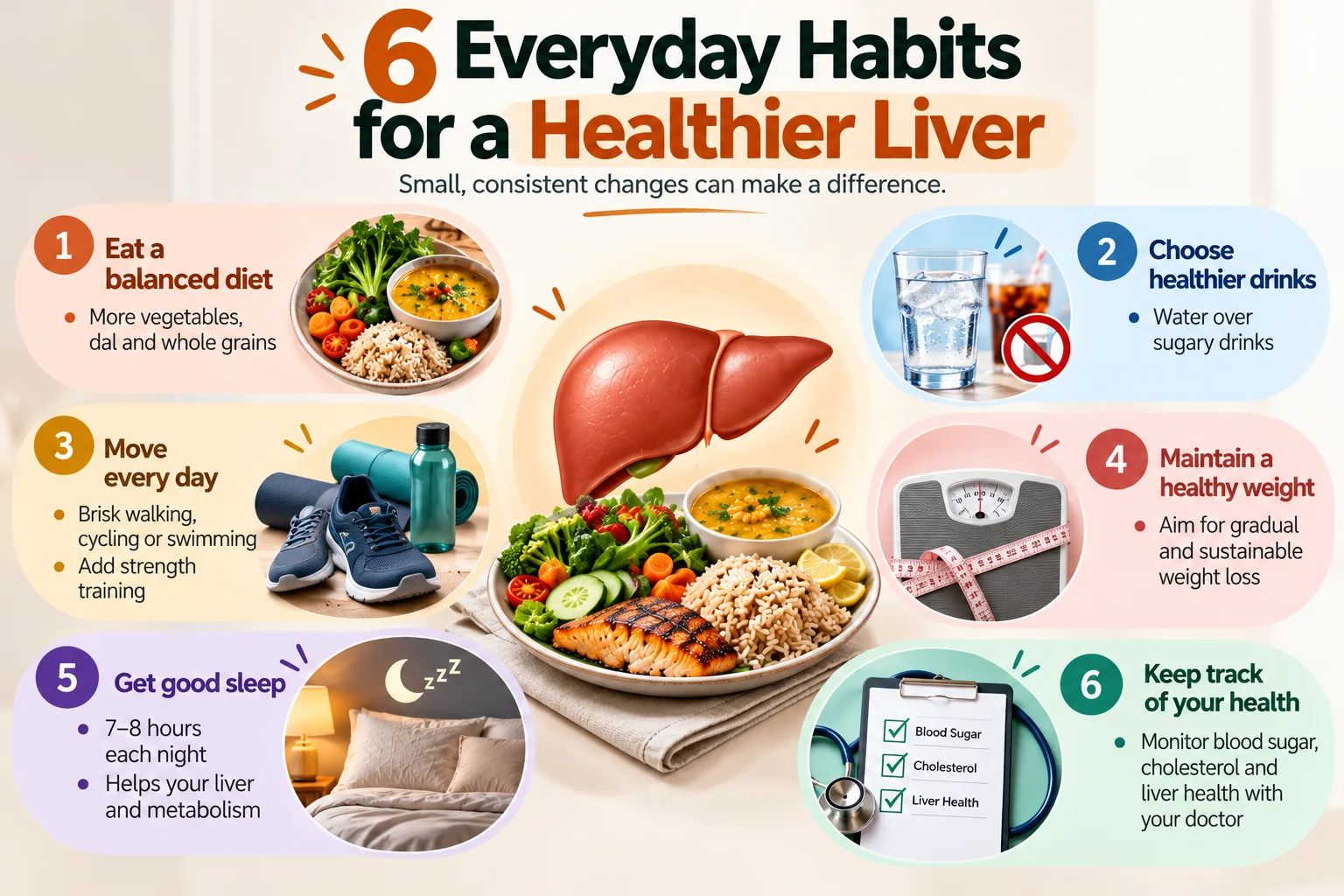
There is no magic pill for fatty liver. Treatment rests on lifestyle, and it works well.
1. Lose weight gradually. Losing around 5 percent of body weight reduces liver fat. Seven to ten percent can calm inflammation, and losing more may improve early scarring. Aim for no more than half to one kilo a week.
2. Change what is on the plate. Cut back on sugar, sweetened drinks, fried snacks and refined flour, and keep rice portions moderate. A Mediterranean-style pattern of vegetables, legumes, nuts, fish and healthy oils has the strongest research behind it.
3. Move every day. Aim for at least 150 minutes of brisk activity a week, such as walking, cycling or swimming, and add two days of strength training. Exercise lowers liver fat even when the weighing scale barely moves.
4. Break up long hours of sitting. A ten-minute walk after meals helps blood sugar behave better.
5. Protect your sleep. Poor sleep worsens insulin resistance. Aim for seven to eight hours, and have loud snoring with daytime sleepiness checked for sleep apnoea.
6. Avoid alcohol. A liver that is already fatty does not need extra work, so most doctors advise staying away from it.
7. Keep related conditions in check. Diabetes, blood pressure and cholesterol should be monitored and treated.
8. Enjoy your coffee. Several studies link regular black coffee, without much sugar, to a lower risk of liver scarring. It is a helpful habit, not a treatment.
Be patient with the process. Liver fat can begin to fall within a few weeks of steady changes, but lasting improvement takes months, and it holds only as long as the habits do.
A Simple Eating Guide for a Healthier Liver
You do not need an expensive diet plan. A few shifts on the everyday plate go a long way.
Eat more of: vegetables and leafy greens, dal and legumes, fish, eggs, nuts, whole grains and millets, and fruit in sensible portions.
Cut back on: sugary drinks, sweets, bakery items, deep-fried snacks, maida, packaged snacks, large servings of white rice, and red or processed meat. Whichever cooking oil you use, use it in moderation.
When to See a Doctor
Get checked if you have a fatty liver report, diabetes or prediabetes, a large waistline, high cholesterol or a family history of liver disease. Follow-up tests are usually advised every six to twelve months. Seek care straight away for yellow eyes or skin, persistent vomiting, black stools or swelling of the abdomen.
Conclusion
Fatty liver in non-drinkers is common, usually silent and closely tied to how we eat, move and sleep. The reassuring part is that the liver forgives. In the early stages, steady changes in diet, activity and weight can bring liver fat down and often reverse the condition entirely.
A diagnosis is not a verdict. It is an early warning, and the sooner you act on it, the more completely your liver can recover. Start with one change this week, whether that is swapping a sweet drink for water or walking after dinner, and build from there.