
How to Control Dandruff Naturally: Traditional Herbal Hair Care for a Healthy Scalp
-
By Nandikesam
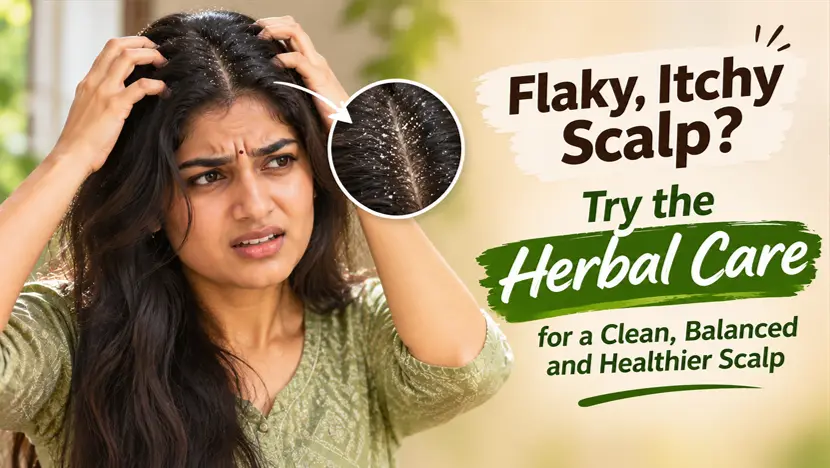
Dandruff is one of those little hair concerns that can become a regular source of frustration. Those tiny white flakes, occasional itching and uncomfortable scalp can make even a good hair day feel less than perfect.
While dandruff is common, the reasons behind it can vary. An oily scalp, dry skin, sensitivity to hair products and conditions such as seborrheic dermatitis can all contribute to scalp flaking.
The first step towards better hair care is understanding that beautiful hair isn’t just about what we see on the outside. It begins with how we care for the scalp.
For generations, traditional Indian hair care has embraced the goodness of herbs, natural oils and gentle cleansing rituals. These practices continue to inspire a more mindful approach to everyday hair care.
Let’s explore how you can build a simple herbal hair care routine that gives your scalp and hair the attention they deserve.
1. Understanding What Your Scalp Is Trying to Tell You
Not all flakes are the same. Sometimes, they are associated with a dry scalp, while in other cases, excess oil and yeast activity contribute to dandruff.
Some common factors include:
- Excess oil production on the scalp.
- Dryness and changes in weather.
- Sensitivity to certain hair care products.
- Infrequent cleansing and product buildup.
- Scalp conditions that require specialised care.
Understanding your scalp type is important because a routine that works for dry hair may not be suitable for an oily, dandruff-prone scalp.
2. The Traditional Connection Between Herbs and Hair Care
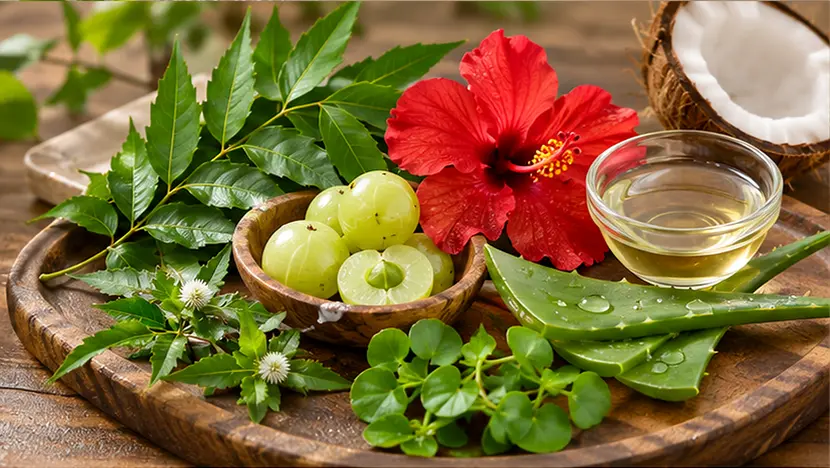
Long before modern hair care formulations became popular, Indian households relied on herbs and plant-based ingredients as part of their hair care rituals.
Neem, amla, hibiscus, bhringraj, brahmi and aloe vera have all found a place in traditional hair care.
Each brings something different to a formulation:
- Neem: Traditionally valued in scalp care.
- Amla: Known for its antioxidant properties.
- Bhringraj: A familiar ingredient in Ayurvedic hair care preparations.
- Brahmi: Traditionally used in hair oils and scalp-care formulations.
- Hibiscus: Commonly used to condition hair.
- Aloe Vera: Valued for its moisturising properties.
The beauty of herbal hair care lies in combining these traditional ingredients thoughtfully and making them part of a consistent routine.
3. The Importance of Nourishing Your Hair with Herbal Oils
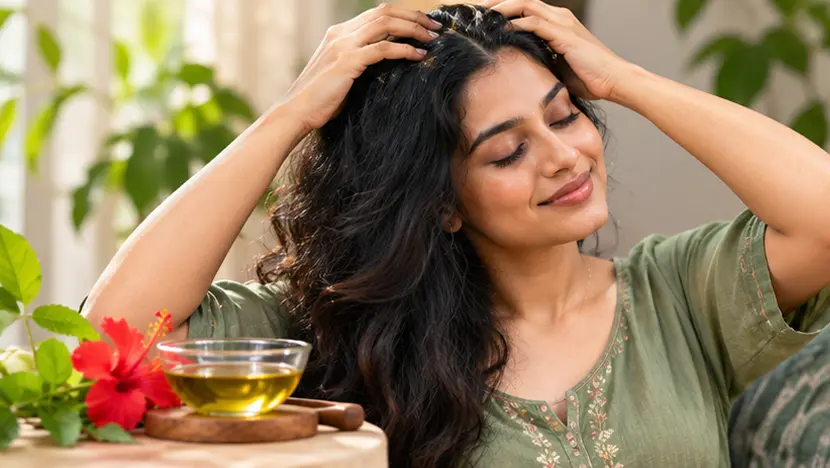
Oiling has always been a familiar part of Indian hair care. From weekend head massages to the comforting smell of herbal oils, it is a ritual many of us grew up with.
A well-formulated hair oil can help condition dry hair, improve softness and reduce friction-related breakage.
One example of this traditional approach is Nandikesam Herbal Hair Oil, a coconut-based blend featuring ingredients such as neelamari, bhringraj, brahmi, amla, hibiscus, aloe vera, jatamansi and sesame.
It brings together familiar botanical ingredients in a formulation inspired by traditional hair nourishment practices.
A gentle scalp massage with a suitable quantity of oil can be a relaxing addition to your hair care routine. However, if your scalp is oily or prone to dandruff, excessive oiling may aggravate the problem. Choose what works for your scalp rather than following a fixed routine.
4. Gentle Cleansing: An Essential Part of Scalp Care
If there is one habit that deserves consistency, it is keeping your scalp clean.
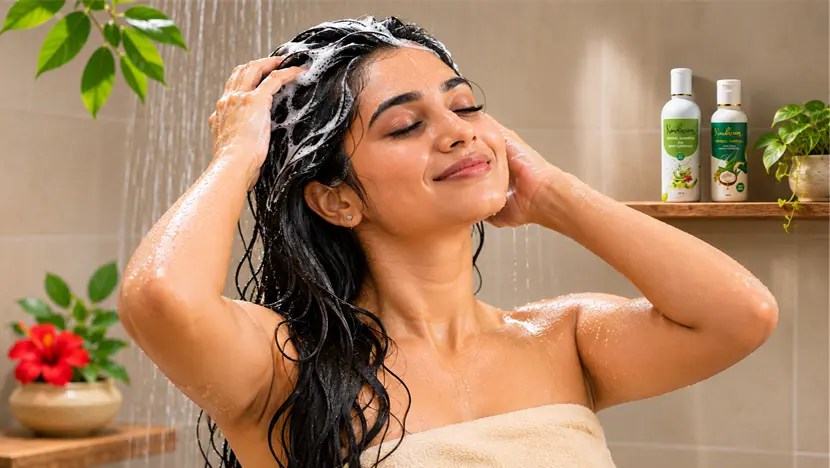
Sweat, excess sebum, dead skin cells and styling product residue can accumulate over time. Regular cleansing helps remove this buildup and keeps your scalp feeling fresh.
Herbal shampoos offer another way to incorporate traditional botanical ingredients into everyday hair care.
Nandikesam Herbal Shampoo features familiar ingredients such as neem, tulsi, amla, hibiscus, bhringraj and aloe vera.
These ingredients have a long-standing association with traditional hair care, while the shampoo provides the cleansing step in a regular hair care routine.
The important thing is to choose a shampoo that suits your scalp, wash as frequently as needed and avoid aggressive scrubbing.
For persistent dandruff, a dermatologist may recommend a medicated anti-dandruff shampoo.
5. Beyond Cleansing: Why Hair Conditioning Matters
A good hair care routine doesn’t end when you rinse out your shampoo.
Hair can sometimes feel dry, rough or difficult to manage, particularly after frequent washing or exposure to environmental stress.
This is where conditioning becomes important.
Nandikesam Herbal Neem Hair Cream brings neem together with ingredients including vitamin E, vitamin B3, glycerine, tea tree essential oil and geranium essential oil.
It offers an additional conditioning step for hair that needs moisture and manageability.
A small amount, applied according to the product directions, can become part of your post-wash hair care ritual.
The idea is simple: cleanse gently, condition appropriately and avoid overloading your scalp with too many products.
6. Building a Simple Herbal Hair Care Routine
You don’t need a complicated ten-step routine to take better care of your hair. A few consistent habits can make everyday hair care easier.
Before washing: Nourish
If your scalp tolerates oiling, use a suitable quantity of herbal hair oil. Massage gently and avoid excessive friction.
During washing: Cleanse
Use a suitable shampoo to remove excess oil, sweat and buildup. Rinse thoroughly.
After washing: Condition
Use a suitable conditioning product to help maintain softness and manageability.
This simple approach brings together three familiar elements of traditional hair care: oiling, cleansing and conditioning.
7. Small Everyday Habits That Support Scalp Health
Along with a suitable hair care routine, pay attention to these everyday habits:
- Avoid scratching or aggressively rubbing your scalp.
- Wash your hair regularly according to your scalp type.
- Avoid excessive use of styling products.
- Keep your combs and hair accessories clean.
- Choose hair care products that suit your scalp.
- Maintain a balanced diet and healthy lifestyle.
Most importantly, don’t ignore persistent itching, redness or severe flaking. These symptoms may need professional attention.
Conclusion: Bringing Traditional Herbal Care into Modern Life
Hair care doesn’t always need to be complicated. Sometimes, it is about returning to simple rituals, choosing ingredients thoughtfully and understanding what your scalp needs.
The traditional combination of nourishing oils, herbal cleansing and conditioning continues to inspire many everyday hair care routines.
With its Herbal Hair Oil, Herbal Shampoo and Herbal Neem Hair Cream, Nandikesam brings these familiar elements together in a way that fits into modern lifestyles.
Because caring for your hair is not just about how it looks today. It’s about building little habits that make you feel good every day.
Nandikesam – Inspired by tradition, made for everyday hair care.